concept statements for the development of an urban parish in the City of Saint Louis
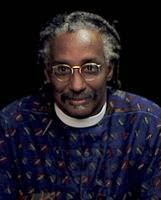
Alan L. Joplin,
"Let us begin to build new communities of justice and peace."
Opening statement
Parish Social Ministry begins with baptism and the call each of us receives to actively participate with the Church in bringing about the kingdom of God. The Gospel confers on each Christian the vocation to love God and neighbor in ways that bear fruit in the life of society. That vocation consists above all in a change of heart; a conversion expressed in praise of God, and in concrete deeds of justice and service.
We have been created to share in the divine life through a destiny that goes far beyond our human capabilities and before which we must in all humility stand in awe. We marvel at the wonders God has done for us, how God has raised up the poor and the lowly and promised great things for them in the Kingdom. God now asks of us sacrifices and reflection on our reverence for human dignity - in ourselves and in others - and on our service and discipleship, so that the divine goal for the human family and this earth can be fulfilled.
Communion with God, sharing God's life, involves a mutual bonding with all on this globe. Jesus taught us to love God and one another and that the concept of neighbor is without limit. We know that we are called to be members of a new covenant of love. We have to move from our devotion to independence, through an understanding of interdependence, to a commitment to human solidarity.
That challenge must find its realization in the kind of community we build among us. Love implies concern for all - especially the poor - and a continued search for those social and economic structures that permit everyone to share in a community that is a part of a redeemed creation (Rom 8:21-23).
Every believer is called to serve “the least of these,” “to hunger and thirst for justice,” to be a “peacemaker.” [Mt 25:31-46; 5:1-10] Christians are called by God to protect human life, to promote human dignity, to defend the poor and to seek the common good. This social mission of the Church belongs to all of us. It is an essential part of what it is to be a believer.
Being a believer means that one lives a certain way - walking with the Lord, doing justice, loving kindness, living peaceably among all people. Christian discipleship means practicing what Jesus preached. Discipleship is found in a relationship with Christ and a commitment to his mission of “bringing good news to the poor, liberty to captives, new sight to the blind and setting the downtrodden free.” [Lk 4:18] (1, 2)
The urban parish, as a constitutive part of its mission, provides an organized outlet for the community to respond to that baptismal call. The urban parish dimensions of social ministry not as an added burden, but as a part of what keeps a parish alive and makes it truly Christian. Effective social ministry helps the parish not only do more, but be more--more of a reflection of the gospel, more of a worshipping and evangelizing people, more of a faithful community. It is an essential part of parish life.
This is not a new message, but it takes on new urgency in light of the increasing clarity and strength of Christian social teaching and the signs of declining respect for human life and human dignity in society. We preach a gospel of justice and peace in a rapidly changing world and troubled nation. Our faith is tested by the violence, injustice, and moral confusion that surround us. In this relatively affluent nation, a fourth of our children under six grow up in poverty. Each year in our nation, 40,000 children die from hunger and its consequences around the world. In our streets and neighborhoods, violence destroys the hopes, dreams, and lives of too many children. In our local communities, too many cannot find decent work, housing, health care, or education. In our families, parents struggle to raise children with dignity, hope, and basic values.
Our faith stands in marked contrast to these grim realities. At a time of rampant individualism, we stand for family and community. At a time of intense consumerism, we insist it is not what we have, but how we treat one another that counts. In an age that does not value permanence or hard work in relationships, we believe marriage is forever and children are a blessing, not a burden. At a time of growing isolation, we remind our nation of its responsibility to the broader world, to pursue peace, to welcome immigrants, to protect the lives of hurting children and refugees. At a time when the rich are getting richer and the poor are getting poorer, we insist the moral test of our society is how we treat and care for the weakest among us.
In these challenging days, we believe that the Christian community needs to be more than ever a source of clear moral vision and effective action. We are called to be the “salt of the earth” and “light of the world” in the words of the Scriptures (Mt 5:13-16). In urban neighborhoods, in suburban communities, and in rural areas, parishes serve as anchors of hope and communities of caring, help families meet their own needs and reach out to others, and serve as centers of community life and networks of assistance. To these ends, Urban Parish Social Ministry should:
The mission of the Urban Parish Social Ministry is to assist parishioners, through the parish community, in understanding and acting on Christian social teaching. This is achieved by providing formation and education in Christian social teaching (allowing those involved to be confident, and ensure, that action arises from Chrisian faith and values) and by identifying, supporting, and training leaders who will organize people and activities around four specific, complementary ministries:
· Direct Service, where parishioners are given opportunities to provide a compassionate, yet empowering, response to the immediate needs of individuals and families;
· Community Organizing and Community Development, where parishioners are given opportunities to put into practice our passionately-held Christian belief in the rights and responsibilities of persons - especially powerless individuals, families, and communities - to fully participate in decisions that affect the quality of everyday life;
· Legislative Advocacy, where parishioners are given opportunities to engage in efforts to create or change state and federal legislation to reflect just and compassionate social policy impacting people in need; and
· Global Solidarity, where parishioners are given opportunities to participate in social justice and peace efforts, such as environmental stewardship projects and world hunger or development programs, that address the needs of our world and/or of our more distant neighbors.
URBAN PARISH MINISTRIES
We rejoice that our eternal God finds us worthy to call us to the service of ensuring that all share in the Gospel promise to salvation (Mark 1:14-15), and liberation (Matthew 25:31-46).
The theology of Paul in I Corinthians (12:4-11), speaking specifically of the giftedness of individuals and of the Spirit working for the common good, is also applicable to the broader and local parishes. Therefore, we affirm that parishes must work in solidarity through communication and consensus. The Spirit of God will be better heard in this atmosphere of solidarity; and the prophetic voice, whether emanating from within or from without the local parish will have its influence.
Urban Parish Ministries seeks to develop, implement and support outreach and peace and justice ministries in urban parishes. These ministries will address current issues that affect human lives by using the faith and spirituality of the Christian Gospel and the commitment of the United Methodist Church. It will foster cooperation and mutual ministry between other outreach organizations, nationwide church programs, interdenominational outreach organizations and government agencies.
Guiding Principles for Formulation of a Urban Parish
· Proposals should be sensitive and responsive to cultural and socio-economic diversity.
· Proposals must not reflect a duplication of services.
· Proposals should indicate follow-through and continuity with existing program initiatives.
· Proposals should evidence provision for leadership training and development.
· Proposals should reflect a sharing of resources through collaboration among parishes
· And/or between parishes and other agencies.
· Proposals must be originated by a parish (or a combination of parishes).
Checklist of Common Proposal Pitfalls
· Program is not sufficiently linked to a local parish(es):
i.e. parish leadership not involved in program planning
program not formally endorsed by parish governing body
program does not receive reasonable financial backing from the parish
· Program duplicates rather than compliments services offered by neighboring agencies and/or parishes. Creative possibilities for networking have not been explored or sufficiently worked through.
· Proposal exhibits weak planning and did not involve key implementers in its development.
Parish Structures and Interdependent Relationships
Parishes are vital to the life of the Church and the life of neighborhoods. The continued development of effective parishes amidst times of diminishing resources and new needs calls us to create more responsive and flexible structures as tools in meeting the challenges of The in the urban communities. Spiritually we must become one people united in faith and interdependent on each other.
This interdependence must be supported by structures and relationships that are mutually beneficial and able to utilize the different gifts of people and communities in complementary partnerships. We also need to address the inequities between parishes in the accumulation and use of resources.
Develop and encourage effective models for parish partnerships which recognize the gifts and needs of each community and promote dialogue, understanding and mutual support.
· Include models that can share the staffing, structures and activities of two or more parish communities
· Provide -supported linking service for urban parishes, recognizing the need for support from pastors and lay leaders.
· Encourage people to remember "where I came from" to get them in touch with urban parishes in their roots
· Consider prayer days, discussion groups, social activities, gardening projects, pulpit exchanges, workshops, community outreach, joint pastoral council meetings and the mutual sharing of time, talent and financial resources.
Utilize the Future Parish Staffing Project to support parishes in assessing parish vitality and viability and in creating, discussing and developing new proposals and models for more effective staffing, ministries, structures and facility use.
· Prepare and encourage viable alternatives for more flexible staffing plans which include permanent deacons, pastoral ministers, lay professionals, and shared staffing between two or more parishes.
· Provide a 'third-party facilitator' service for helping parishes to propose, explore and implement new models of staffing and restructuring with other parishes
· Assist parishes in making the best use of their buildings in service to neighborhood needs.
Continue to develop and support evangelization efforts which involve the cooperative efforts of parishes and utilize learning from past experiences.
· Learn from and support the evangelization efforts within the African American and Hispanic an other ethnic communities
· Build upon successful parish efforts which incorporate the following qualities: facilities and opportunities for youth, good liturgy and hospitality, an experience of a welcoming community, effective outreach, involvement in revitalizing the neighborhood, adequate parish support staff and program capability.
Assign pastors and parish administrators who will consistently support models of interparish collaboration that have been established as well as continue to develop new models.
Encourage parishes to consider wider Church needs and not only the assessment of fiscal soundness and local parish needs, at the time when major parish expenditures (related to facilities, staffing and investments) are being planned.
Overview
"The joy and hope, the grief and anguish of the people of our time, especially of those who are poor or afflicted in any way, are the joy and hope, the grief and anguish of the followers of Christ as well.
The pastoral statement on The Urban Parish is a response to the social and moral issues resulting from dramatic movements of people and the suburbanization of our church since World War II. It is based upon the following five principles:
· social justice
· redevelopment
· interdependence
· restructuring, and
· preferential love of the poor.
The vision of Urban Parish is not just a guide to the revitalization of the city nor does it merely add a moral dimension to political, economic, and social decisions that affect city life. Rather it is a redefinition of who we are and what we do. We are not separate people but a faith community grounded in the reality of our times and in our solidarity with the whole human family. The United Methodist Church has a prophetic role in calling for and participating in an extensive collaboration among many different sectors of the wider metropolitan community.
The principles of social justice and preferential love for the poor lead us to action in addressing the injustice and inequity that we find in the lives of people in our society, with particular concern for people who are most vulnerable in our cities. These actions must overcome poverty, racism, crime, apathy, fear and the pervasive influence of violence in our culture.
Our actions will build upon the many good things already being done within our cities. But we also must face the harsh economic reality of the times and seek to reverse powerful trends of out migration, unjust social mores, and diminishing resources. It means personal and institutional conversion as well as tough, pragmatic, personal and institutional choices.
The recommended actions are not a new church plan, Vision or Goals. Rather, they invite us to see new possibilities and challenges in what it means to be a Celebrating, Evangelizing, Teaching, Caring and Participating community.
We are also called to a deeper understanding of stewardship. Good stewardship means using our gifts and resources in such a way that we can be even more responsive, interdependent and mutually supportive.
To succeed in this vision, we will need strong organizational skills put to use in imparting a moral and ethical dimension to political and economic life. It will be necessary to act out Gospel values in the home, neighborhood, workplace and in the political arena.
The vision of The Urban Parish must be a way of life that is the constant thread in our daily activity, the reflective application of Gospel values to the challenges of our time and place in history.
Recommended Actions/Two Key Perspectives
In Implementing These Actions
Family perspective: Family life is foundational to the life of our cities, our society and our Church. If we strengthen and support families - single parent families, multi-generational families and persons living alone, we will renew our cities. We must view the city through the lens of the family in planning activities, assessing their impact upon families and building partnerships with families.
Multicultural perspective: Our church area has a great diversity of cultures. This diversity bring both gifts and challenges. We need to approach implementation activities in ways that build bridges and relationships among our different cultures. If we build a healthy respect and appreciation for the different cultures of our communities, we will renew our cities.
Five Key Principles...the Basis for the Urban Parish
Social Justice
The practice of charity is different from promoting change which will further the cause of social justice. We are called to work to change underlying causes of what has transpired, focusing on policies and practices of federal, state and local government that strongly favor out migration over moving inward or simply staying in one's community.
The point is not to halt out migration, as people must be free to move as they wish, but to balance the role of government in such a way that redevelopment and maintenance of cities and inner suburbs is given as much support as the development of new suburbs. Achievement of the needed change will require unprecedented cooperative action on the part of public officials across the region, in order to influence state and federal government and in order to guide future public investments toward new visions and goals.
Rebuilding must occur in our cities where vacant land presents that opportunity. But we must rebuild in ways that serve to heal the wounds and close the separations that have been opened and aggravated by what has transpired over the past 400 years.
Redevelopment
Government policies which support development of new suburbs while neglecting the redevelopment of older cities have contributed to the problems caused by out migration. In an analogous way, the Church can fall victim to this same strategy by concentrating on the development of newer parishes in the suburbs, while older parishes in the cities are allowed to decline. For government, banks, developers, real estate brokers and others, redevelopment means creating and investing. For the Church, redevelopment means renewing its commitment to the cities and finding ways to provide necessary resources for ministry being done there.
Interdependence
Many differences exist between ministry to the city and ministry to the suburbs, but a single mission to reveal God's love binds them together. There are gifts present in every church, whether urban or suburban, which can be shared with all the churches. In order to deal effectively with the effects of out migration, we will need to find ways to share these gifts more widely with one another. Parishes which have reached out beyond their boundaries have given witness to the kind of Church we ought to be. The parish which does not in some way extend its work beyond its own parish boundaries fails to be Church in its most complete meaning. In our diocesan commitment to stewardship, we must seek to define stewardship in a way that encompasses the urban and suburban Church, with the gifts and problems unique to each.
Restructuring
In order to more effectively and more efficiently serve the people living in the cities, it will be necessary to restructure the current church parishes in such a way that they will be able to offer proper ministry to their people. We must also work to makes these parishes financially stable and, as much as possible, independent of church subsidy. Restructuring of our city parishes will not diminish in any way the Church's commitment to the city, but will actually increase the effectiveness of the Church's presence there. In considering the ways in which the Church can be restructured in the city, special care must be taken to be sensitive to the cultural diversity of its residents.
Preferential Love for the Poor:
Acknowledging that there are many poor people living in the suburbs, we must still admit that more and more the results of out migration have contributed to the existence of two societies: one poor and living in the older cities, the other more affluent and living in the outer suburbs. The love of Christ compels us to turn our attention to the needs of our poorer sisters and brothers, who have been most hurt by present policies. Following the example of St. Vincent de Paul, the Apostle of Charity, we cannot relax our efforts to assist the poor in their need. We must be especially mindful of women and children, who are often the primary victims of social neglect
The following seven principles of Christian social teaching:
· Life and Dignity of the Human Person
· Call to Family, Community, and Participation
· Rights and Responsibilities
· Option for the Poor and Vulnerable
· Dignity of Work and the Rights of Workers
· Solidarity
· Care for God’s Creation
Life and Dignity of the Human Person
In a world warped by materialism and declining respect for human life, the Church proclaims that human life is sacred and that the dignity of the human person is the foundation of a moral vision for society. Every human person is created in the image and likeness of God. Christian belief in the sanctity of human life and the inherent dignity of the human person is the foundation of all the principles of Christian social teaching. People are more important than things, and that the measure of every institution is whether it threatens or enhances the life and dignity of the human person.
The human person is central, the clearest reflection of God among us.
Each person possesses a basic dignity that comes from God, not from any human quality or accomplishment.
The test of every human institution or policy is whether it enhances the life and dignity of the human person.
Call to Family, Community, and Participation
How we organize our society—in economics and politics, in law and policy—directly affects human dignity and the capacity of individuals to grow in community. Marriage and the family are central social institutions that must be supported and strengthened, not undermined. While our society often exalts individualism, the Christian tradition teaches that human beings grow and achieve fulfillment in community. People have a right and a duty to participate in society, seeking together the common good and well-being of all, especially the poor and vulnerable.
The Church teaches that the role of government and other institutions is to protect human life and human dignity and promote the common good.
· No community is more central than the family; it is the basic cell of society. It is where we learn and act on our values. What happens in the family is the basis of a truly human life.
· We have the right and responsibility to participate in and contribute to the broader communities in society. The state and other institutions of political and economic life, with both their limitations and obligations, are instruments to protect the life, dignity, and rights of the human person.. When basic human needs are not being met by private initiative, then people must work through their government, at appropriate levels, to meet those needs.
· A central test of political, legal, and economic institutions is what they do to people, what they do for people, and how people participate in them.
Rights and Responsibilities
In a world where some speak mostly of “rights” and others mostly of “responsibilities,” the Christian tradition teaches that human dignity can be protected and a healthy community can be achieved only if human rights are protected and responsibilities are met. Therefore, every person has a fundamental right to life and a right to those things required for human decency: faith and family, food and shelter, health care and housing, education and employment.
Corresponding to these rights are duties and responsibilities—to one another, to our families, and to the larger society. While public debate in our nation is often divided between those who focus on personal responsibility and those who focus on social responsibilities, our tradition insists that both are necessary.
· Flowing from our God-given dignity, each person has basic rights and responsibilities. These include: the rights to freedom of conscience and religious liberty, to raise a family, to immigrate, to live free from discrimination, and to have a share of earthly goods sufficient for oneself and one’s family. People have a fundamental right to life and those things that make life truly human: food, clothing, housing, health care, education, security, social services, and employment.
· Corresponding to these rights are duties and responsibilities - to one another, to our families, and to the larger society - to respect the rights of others and work for the common good.
Option for the Poor and Vulnerable
In a world characterized by growing prosperity for some and pervasive poverty for others, Christian teaching proclaims that a basic moral test is how our most vulnerable members are faring. In a society marred by deepening divisions between rich and poor, Christian tradition recalls the story of the Last Judgment (Mt 25:31-46) and instructs us to put the needs of the poor and vulnerable first.
Scripture teaches that God has a special concern for the poor and vulnerable (Ex 22:20-26). The prophets denounced injustice toward the poor as a lack of fidelity to the God of Israel (Is 1:21-23; Jer 5:28). Jesus, who identified himself with the least of these (Mt 25:40-45), came to preach the good news to the poor and told us, “Give to him who asks of you, do not refuse one who would borrow from you” (Mt 11:5; 5:42). The Church calls on all of us to embrace this preferential love of the poor and vulnerable, to embody it in our lives, and to work to have it shape public policies and priorities.
· Poor and vulnerable people have a special place in Christian social teaching. A basic moral test of a society is how its most vulnerable members are faring.
· Christian tradition calls us to put the needs of the poor and vulnerable first (Mt 25:31-46).
· We must seek creative ways to expand the emphasis of our nation’s founders on individual rights and freedom by extending democratic ideals to economic life and thus ensure that the basic requirements for life with dignity are accessible to all.
Dignity of Work and the Rights of Workers
In a marketplace where too often the quarterly bottom line takes precedence over the rights of workers, we believe that the economy must serve people, not the other way around. Work is more than a way to make a living; it is a form of continuing participation in God's creation. Work is a way of fulfilling part of our human potential given to us by God. If the dignity of work is to be protected, then the basic rights of workers must be respected—the right to productive work, to decent and fair wages, to organize and join unions, to ownership and private property, and to economic initiative. Respecting these rights promotes an economy that protects human life, defends human rights, and advances the well-being of all.
· Work is more than earning a living. It is an expression of our dignity and a form of continuing participation in God’s creation.
· People have a right to decent and productive work, to decent and fair wages, to private property and economic initiative.
· Traditionally, workers have the strong support of the Church in forming and joining unions and worker associations of their choosing in the exercise of their dignity and rights.
· In Christian social teaching, the economy exists to serve people, not the other way around.
Solidarity
Our culture is tempted to turn inward, becoming indifferent and sometimes isolationist in the face of international responsibilities. Catholic social teaching proclaims that we are our brothers’ and sisters’ keepers, wherever they live. We are one human family, whatever our national, racial, ethnic, economic, and ideological differences. Learning to practice the virtue of solidarity means learning that “loving our neighbor” has global dimensions in an interdependent world. Because of the interdependence among all the members of the human family around the globe, we have a moral responsibility to commit ourselves to the common good at all levels: in local communities, in our nation, in the community of nations. This virtue is described by Pope John Paul II as “a firm and persevering determination to commit oneself to the common good; that is to say to the good of all and of each individual, because we are all really responsible for all” (Sollicitudo Rei Socialis, no. 38).
We are one human family, whatever our national, racial, ethnic, economic, and ideological differences.
We are our brothers’ and sisters’ keepers. In a limited world, our responsibilities to one another cross all boundaries.
Solidarity is the contemporary expression of the traditional Catholic image of the Mystical Body of Christ. “Loving our neighbor” has global dimensions in an interdependent world.
Care for God’s Creation
On a planet conflicted over environmental issues, the Catholic tradition insists that we show our respect for the Creator by our stewardship of creation. Care for the earth is not just an Earth Day slogan, it is a requirement of our faith. We are called to protect people and the planet, living our faith in relationship with all of God's creation. This environmental challenge has fundamental moral and ethical dimensions that cannot be ignored.
The world that God created has been entrusted to us, yet our use of it must be directed by God's plan for creation, not simply by our own benefit. Our stewardship of the earth is a kind of participation in God's act of creating and sustaining the world. In our use of creation, we must be guided by our concern for the welfare of others, both around the world and for generations to come, and by a respect for the intrinsic worth and beauty of all God's creatures.
Called to be co-creators with God and to have “dominion” over the earth, we are called to be good stewards of what God has entrusted to us.
It is a requirement of our faith that we protect creation and each other from the harm that we can bring.
The environmental challenge has fundamental moral and ethical dimensions to it that we simply cannot ignore.
Reflection Questions:
What does it mean to be “co-creators with God,” to be good stewards of God’s creation, especially when it comes to the environment?
By sharing in God’s goodness, sharing in God’s dominion, and having been invited to dwell in community, humanity is inextricably connected to one another, the earth, and God. Give an example of how you see this interdependence in your daily life, or the life of the parish.
In Conclusion
Catholic social teaching is a complex and nuanced tradition with many other important elements. Principles like “subsidiarity” and the “common good” outline the advantages and limitations of markets, the responsibilities and limits of government, and the essential roles of voluntary associations. These and other key principles are outlined in greater detail in the Catechism of the Catholic Church. These principles build on the foundation of Catholic social teaching: the dignity of human life. This central Catholic principle requires that we measure every policy, every institution, and every action by whether it protects human life and enhances human dignity, especially for the poor and vulnerable.
These moral values and others outlined in various papal and Episcopal documents are part of a systematic moral framework and a precious intellectual heritage that we call Catholic social teaching. The Scriptures say, “Without a vision the people perish” (Prv 29:18). As Catholics, we have an inspiring vision in our social teaching. In a world that hungers for a sense of meaning and moral direction, this teaching offers ethical criteria for action. In a society of rapid change and often confused moral values, this teaching offers consistent moral guidance for the future. For Catholics, this social teaching is a central part of our identity. In the words of Pope John Paul II, it is “genuine doctrine” (Centesimus Annus, no. 5).
Alan L. Joplin,
"Let us begin to build new communities of justice and peace."
Opening statement
Parish Social Ministry begins with baptism and the call each of us receives to actively participate with the Church in bringing about the kingdom of God. The Gospel confers on each Christian the vocation to love God and neighbor in ways that bear fruit in the life of society. That vocation consists above all in a change of heart; a conversion expressed in praise of God, and in concrete deeds of justice and service.
We have been created to share in the divine life through a destiny that goes far beyond our human capabilities and before which we must in all humility stand in awe. We marvel at the wonders God has done for us, how God has raised up the poor and the lowly and promised great things for them in the Kingdom. God now asks of us sacrifices and reflection on our reverence for human dignity - in ourselves and in others - and on our service and discipleship, so that the divine goal for the human family and this earth can be fulfilled.
Communion with God, sharing God's life, involves a mutual bonding with all on this globe. Jesus taught us to love God and one another and that the concept of neighbor is without limit. We know that we are called to be members of a new covenant of love. We have to move from our devotion to independence, through an understanding of interdependence, to a commitment to human solidarity.
That challenge must find its realization in the kind of community we build among us. Love implies concern for all - especially the poor - and a continued search for those social and economic structures that permit everyone to share in a community that is a part of a redeemed creation (Rom 8:21-23).
Every believer is called to serve “the least of these,” “to hunger and thirst for justice,” to be a “peacemaker.” [Mt 25:31-46; 5:1-10] Christians are called by God to protect human life, to promote human dignity, to defend the poor and to seek the common good. This social mission of the Church belongs to all of us. It is an essential part of what it is to be a believer.
Being a believer means that one lives a certain way - walking with the Lord, doing justice, loving kindness, living peaceably among all people. Christian discipleship means practicing what Jesus preached. Discipleship is found in a relationship with Christ and a commitment to his mission of “bringing good news to the poor, liberty to captives, new sight to the blind and setting the downtrodden free.” [Lk 4:18] (1, 2)
The urban parish, as a constitutive part of its mission, provides an organized outlet for the community to respond to that baptismal call. The urban parish dimensions of social ministry not as an added burden, but as a part of what keeps a parish alive and makes it truly Christian. Effective social ministry helps the parish not only do more, but be more--more of a reflection of the gospel, more of a worshipping and evangelizing people, more of a faithful community. It is an essential part of parish life.
This is not a new message, but it takes on new urgency in light of the increasing clarity and strength of Christian social teaching and the signs of declining respect for human life and human dignity in society. We preach a gospel of justice and peace in a rapidly changing world and troubled nation. Our faith is tested by the violence, injustice, and moral confusion that surround us. In this relatively affluent nation, a fourth of our children under six grow up in poverty. Each year in our nation, 40,000 children die from hunger and its consequences around the world. In our streets and neighborhoods, violence destroys the hopes, dreams, and lives of too many children. In our local communities, too many cannot find decent work, housing, health care, or education. In our families, parents struggle to raise children with dignity, hope, and basic values.
Our faith stands in marked contrast to these grim realities. At a time of rampant individualism, we stand for family and community. At a time of intense consumerism, we insist it is not what we have, but how we treat one another that counts. In an age that does not value permanence or hard work in relationships, we believe marriage is forever and children are a blessing, not a burden. At a time of growing isolation, we remind our nation of its responsibility to the broader world, to pursue peace, to welcome immigrants, to protect the lives of hurting children and refugees. At a time when the rich are getting richer and the poor are getting poorer, we insist the moral test of our society is how we treat and care for the weakest among us.
In these challenging days, we believe that the Christian community needs to be more than ever a source of clear moral vision and effective action. We are called to be the “salt of the earth” and “light of the world” in the words of the Scriptures (Mt 5:13-16). In urban neighborhoods, in suburban communities, and in rural areas, parishes serve as anchors of hope and communities of caring, help families meet their own needs and reach out to others, and serve as centers of community life and networks of assistance. To these ends, Urban Parish Social Ministry should:
The mission of the Urban Parish Social Ministry is to assist parishioners, through the parish community, in understanding and acting on Christian social teaching. This is achieved by providing formation and education in Christian social teaching (allowing those involved to be confident, and ensure, that action arises from Chrisian faith and values) and by identifying, supporting, and training leaders who will organize people and activities around four specific, complementary ministries:
· Direct Service, where parishioners are given opportunities to provide a compassionate, yet empowering, response to the immediate needs of individuals and families;
· Community Organizing and Community Development, where parishioners are given opportunities to put into practice our passionately-held Christian belief in the rights and responsibilities of persons - especially powerless individuals, families, and communities - to fully participate in decisions that affect the quality of everyday life;
· Legislative Advocacy, where parishioners are given opportunities to engage in efforts to create or change state and federal legislation to reflect just and compassionate social policy impacting people in need; and
· Global Solidarity, where parishioners are given opportunities to participate in social justice and peace efforts, such as environmental stewardship projects and world hunger or development programs, that address the needs of our world and/or of our more distant neighbors.
URBAN PARISH MINISTRIES
We rejoice that our eternal God finds us worthy to call us to the service of ensuring that all share in the Gospel promise to salvation (Mark 1:14-15), and liberation (Matthew 25:31-46).
The theology of Paul in I Corinthians (12:4-11), speaking specifically of the giftedness of individuals and of the Spirit working for the common good, is also applicable to the broader and local parishes. Therefore, we affirm that parishes must work in solidarity through communication and consensus. The Spirit of God will be better heard in this atmosphere of solidarity; and the prophetic voice, whether emanating from within or from without the local parish will have its influence.
Urban Parish Ministries seeks to develop, implement and support outreach and peace and justice ministries in urban parishes. These ministries will address current issues that affect human lives by using the faith and spirituality of the Christian Gospel and the commitment of the United Methodist Church. It will foster cooperation and mutual ministry between other outreach organizations, nationwide church programs, interdenominational outreach organizations and government agencies.
Guiding Principles for Formulation of a Urban Parish
· Proposals should be sensitive and responsive to cultural and socio-economic diversity.
· Proposals must not reflect a duplication of services.
· Proposals should indicate follow-through and continuity with existing program initiatives.
· Proposals should evidence provision for leadership training and development.
· Proposals should reflect a sharing of resources through collaboration among parishes
· And/or between parishes and other agencies.
· Proposals must be originated by a parish (or a combination of parishes).
Checklist of Common Proposal Pitfalls
· Program is not sufficiently linked to a local parish(es):
i.e. parish leadership not involved in program planning
program not formally endorsed by parish governing body
program does not receive reasonable financial backing from the parish
· Program duplicates rather than compliments services offered by neighboring agencies and/or parishes. Creative possibilities for networking have not been explored or sufficiently worked through.
· Proposal exhibits weak planning and did not involve key implementers in its development.
Parish Structures and Interdependent Relationships
Parishes are vital to the life of the Church and the life of neighborhoods. The continued development of effective parishes amidst times of diminishing resources and new needs calls us to create more responsive and flexible structures as tools in meeting the challenges of The in the urban communities. Spiritually we must become one people united in faith and interdependent on each other.
This interdependence must be supported by structures and relationships that are mutually beneficial and able to utilize the different gifts of people and communities in complementary partnerships. We also need to address the inequities between parishes in the accumulation and use of resources.
Develop and encourage effective models for parish partnerships which recognize the gifts and needs of each community and promote dialogue, understanding and mutual support.
· Include models that can share the staffing, structures and activities of two or more parish communities
· Provide -supported linking service for urban parishes, recognizing the need for support from pastors and lay leaders.
· Encourage people to remember "where I came from" to get them in touch with urban parishes in their roots
· Consider prayer days, discussion groups, social activities, gardening projects, pulpit exchanges, workshops, community outreach, joint pastoral council meetings and the mutual sharing of time, talent and financial resources.
Utilize the Future Parish Staffing Project to support parishes in assessing parish vitality and viability and in creating, discussing and developing new proposals and models for more effective staffing, ministries, structures and facility use.
· Prepare and encourage viable alternatives for more flexible staffing plans which include permanent deacons, pastoral ministers, lay professionals, and shared staffing between two or more parishes.
· Provide a 'third-party facilitator' service for helping parishes to propose, explore and implement new models of staffing and restructuring with other parishes
· Assist parishes in making the best use of their buildings in service to neighborhood needs.
Continue to develop and support evangelization efforts which involve the cooperative efforts of parishes and utilize learning from past experiences.
· Learn from and support the evangelization efforts within the African American and Hispanic an other ethnic communities
· Build upon successful parish efforts which incorporate the following qualities: facilities and opportunities for youth, good liturgy and hospitality, an experience of a welcoming community, effective outreach, involvement in revitalizing the neighborhood, adequate parish support staff and program capability.
Assign pastors and parish administrators who will consistently support models of interparish collaboration that have been established as well as continue to develop new models.
Encourage parishes to consider wider Church needs and not only the assessment of fiscal soundness and local parish needs, at the time when major parish expenditures (related to facilities, staffing and investments) are being planned.
Overview
"The joy and hope, the grief and anguish of the people of our time, especially of those who are poor or afflicted in any way, are the joy and hope, the grief and anguish of the followers of Christ as well.
The pastoral statement on The Urban Parish is a response to the social and moral issues resulting from dramatic movements of people and the suburbanization of our church since World War II. It is based upon the following five principles:
· social justice
· redevelopment
· interdependence
· restructuring, and
· preferential love of the poor.
The vision of Urban Parish is not just a guide to the revitalization of the city nor does it merely add a moral dimension to political, economic, and social decisions that affect city life. Rather it is a redefinition of who we are and what we do. We are not separate people but a faith community grounded in the reality of our times and in our solidarity with the whole human family. The United Methodist Church has a prophetic role in calling for and participating in an extensive collaboration among many different sectors of the wider metropolitan community.
The principles of social justice and preferential love for the poor lead us to action in addressing the injustice and inequity that we find in the lives of people in our society, with particular concern for people who are most vulnerable in our cities. These actions must overcome poverty, racism, crime, apathy, fear and the pervasive influence of violence in our culture.
Our actions will build upon the many good things already being done within our cities. But we also must face the harsh economic reality of the times and seek to reverse powerful trends of out migration, unjust social mores, and diminishing resources. It means personal and institutional conversion as well as tough, pragmatic, personal and institutional choices.
The recommended actions are not a new church plan, Vision or Goals. Rather, they invite us to see new possibilities and challenges in what it means to be a Celebrating, Evangelizing, Teaching, Caring and Participating community.
We are also called to a deeper understanding of stewardship. Good stewardship means using our gifts and resources in such a way that we can be even more responsive, interdependent and mutually supportive.
To succeed in this vision, we will need strong organizational skills put to use in imparting a moral and ethical dimension to political and economic life. It will be necessary to act out Gospel values in the home, neighborhood, workplace and in the political arena.
The vision of The Urban Parish must be a way of life that is the constant thread in our daily activity, the reflective application of Gospel values to the challenges of our time and place in history.
Recommended Actions/Two Key Perspectives
In Implementing These Actions
Family perspective: Family life is foundational to the life of our cities, our society and our Church. If we strengthen and support families - single parent families, multi-generational families and persons living alone, we will renew our cities. We must view the city through the lens of the family in planning activities, assessing their impact upon families and building partnerships with families.
Multicultural perspective: Our church area has a great diversity of cultures. This diversity bring both gifts and challenges. We need to approach implementation activities in ways that build bridges and relationships among our different cultures. If we build a healthy respect and appreciation for the different cultures of our communities, we will renew our cities.
Five Key Principles...the Basis for the Urban Parish
Social Justice
The practice of charity is different from promoting change which will further the cause of social justice. We are called to work to change underlying causes of what has transpired, focusing on policies and practices of federal, state and local government that strongly favor out migration over moving inward or simply staying in one's community.
The point is not to halt out migration, as people must be free to move as they wish, but to balance the role of government in such a way that redevelopment and maintenance of cities and inner suburbs is given as much support as the development of new suburbs. Achievement of the needed change will require unprecedented cooperative action on the part of public officials across the region, in order to influence state and federal government and in order to guide future public investments toward new visions and goals.
Rebuilding must occur in our cities where vacant land presents that opportunity. But we must rebuild in ways that serve to heal the wounds and close the separations that have been opened and aggravated by what has transpired over the past 400 years.
Redevelopment
Government policies which support development of new suburbs while neglecting the redevelopment of older cities have contributed to the problems caused by out migration. In an analogous way, the Church can fall victim to this same strategy by concentrating on the development of newer parishes in the suburbs, while older parishes in the cities are allowed to decline. For government, banks, developers, real estate brokers and others, redevelopment means creating and investing. For the Church, redevelopment means renewing its commitment to the cities and finding ways to provide necessary resources for ministry being done there.
Interdependence
Many differences exist between ministry to the city and ministry to the suburbs, but a single mission to reveal God's love binds them together. There are gifts present in every church, whether urban or suburban, which can be shared with all the churches. In order to deal effectively with the effects of out migration, we will need to find ways to share these gifts more widely with one another. Parishes which have reached out beyond their boundaries have given witness to the kind of Church we ought to be. The parish which does not in some way extend its work beyond its own parish boundaries fails to be Church in its most complete meaning. In our diocesan commitment to stewardship, we must seek to define stewardship in a way that encompasses the urban and suburban Church, with the gifts and problems unique to each.
Restructuring
In order to more effectively and more efficiently serve the people living in the cities, it will be necessary to restructure the current church parishes in such a way that they will be able to offer proper ministry to their people. We must also work to makes these parishes financially stable and, as much as possible, independent of church subsidy. Restructuring of our city parishes will not diminish in any way the Church's commitment to the city, but will actually increase the effectiveness of the Church's presence there. In considering the ways in which the Church can be restructured in the city, special care must be taken to be sensitive to the cultural diversity of its residents.
Preferential Love for the Poor:
Acknowledging that there are many poor people living in the suburbs, we must still admit that more and more the results of out migration have contributed to the existence of two societies: one poor and living in the older cities, the other more affluent and living in the outer suburbs. The love of Christ compels us to turn our attention to the needs of our poorer sisters and brothers, who have been most hurt by present policies. Following the example of St. Vincent de Paul, the Apostle of Charity, we cannot relax our efforts to assist the poor in their need. We must be especially mindful of women and children, who are often the primary victims of social neglect
The following seven principles of Christian social teaching:
· Life and Dignity of the Human Person
· Call to Family, Community, and Participation
· Rights and Responsibilities
· Option for the Poor and Vulnerable
· Dignity of Work and the Rights of Workers
· Solidarity
· Care for God’s Creation
Life and Dignity of the Human Person
In a world warped by materialism and declining respect for human life, the Church proclaims that human life is sacred and that the dignity of the human person is the foundation of a moral vision for society. Every human person is created in the image and likeness of God. Christian belief in the sanctity of human life and the inherent dignity of the human person is the foundation of all the principles of Christian social teaching. People are more important than things, and that the measure of every institution is whether it threatens or enhances the life and dignity of the human person.
The human person is central, the clearest reflection of God among us.
Each person possesses a basic dignity that comes from God, not from any human quality or accomplishment.
The test of every human institution or policy is whether it enhances the life and dignity of the human person.
Call to Family, Community, and Participation
How we organize our society—in economics and politics, in law and policy—directly affects human dignity and the capacity of individuals to grow in community. Marriage and the family are central social institutions that must be supported and strengthened, not undermined. While our society often exalts individualism, the Christian tradition teaches that human beings grow and achieve fulfillment in community. People have a right and a duty to participate in society, seeking together the common good and well-being of all, especially the poor and vulnerable.
The Church teaches that the role of government and other institutions is to protect human life and human dignity and promote the common good.
· No community is more central than the family; it is the basic cell of society. It is where we learn and act on our values. What happens in the family is the basis of a truly human life.
· We have the right and responsibility to participate in and contribute to the broader communities in society. The state and other institutions of political and economic life, with both their limitations and obligations, are instruments to protect the life, dignity, and rights of the human person.. When basic human needs are not being met by private initiative, then people must work through their government, at appropriate levels, to meet those needs.
· A central test of political, legal, and economic institutions is what they do to people, what they do for people, and how people participate in them.
Rights and Responsibilities
In a world where some speak mostly of “rights” and others mostly of “responsibilities,” the Christian tradition teaches that human dignity can be protected and a healthy community can be achieved only if human rights are protected and responsibilities are met. Therefore, every person has a fundamental right to life and a right to those things required for human decency: faith and family, food and shelter, health care and housing, education and employment.
Corresponding to these rights are duties and responsibilities—to one another, to our families, and to the larger society. While public debate in our nation is often divided between those who focus on personal responsibility and those who focus on social responsibilities, our tradition insists that both are necessary.
· Flowing from our God-given dignity, each person has basic rights and responsibilities. These include: the rights to freedom of conscience and religious liberty, to raise a family, to immigrate, to live free from discrimination, and to have a share of earthly goods sufficient for oneself and one’s family. People have a fundamental right to life and those things that make life truly human: food, clothing, housing, health care, education, security, social services, and employment.
· Corresponding to these rights are duties and responsibilities - to one another, to our families, and to the larger society - to respect the rights of others and work for the common good.
Option for the Poor and Vulnerable
In a world characterized by growing prosperity for some and pervasive poverty for others, Christian teaching proclaims that a basic moral test is how our most vulnerable members are faring. In a society marred by deepening divisions between rich and poor, Christian tradition recalls the story of the Last Judgment (Mt 25:31-46) and instructs us to put the needs of the poor and vulnerable first.
Scripture teaches that God has a special concern for the poor and vulnerable (Ex 22:20-26). The prophets denounced injustice toward the poor as a lack of fidelity to the God of Israel (Is 1:21-23; Jer 5:28). Jesus, who identified himself with the least of these (Mt 25:40-45), came to preach the good news to the poor and told us, “Give to him who asks of you, do not refuse one who would borrow from you” (Mt 11:5; 5:42). The Church calls on all of us to embrace this preferential love of the poor and vulnerable, to embody it in our lives, and to work to have it shape public policies and priorities.
· Poor and vulnerable people have a special place in Christian social teaching. A basic moral test of a society is how its most vulnerable members are faring.
· Christian tradition calls us to put the needs of the poor and vulnerable first (Mt 25:31-46).
· We must seek creative ways to expand the emphasis of our nation’s founders on individual rights and freedom by extending democratic ideals to economic life and thus ensure that the basic requirements for life with dignity are accessible to all.
Dignity of Work and the Rights of Workers
In a marketplace where too often the quarterly bottom line takes precedence over the rights of workers, we believe that the economy must serve people, not the other way around. Work is more than a way to make a living; it is a form of continuing participation in God's creation. Work is a way of fulfilling part of our human potential given to us by God. If the dignity of work is to be protected, then the basic rights of workers must be respected—the right to productive work, to decent and fair wages, to organize and join unions, to ownership and private property, and to economic initiative. Respecting these rights promotes an economy that protects human life, defends human rights, and advances the well-being of all.
· Work is more than earning a living. It is an expression of our dignity and a form of continuing participation in God’s creation.
· People have a right to decent and productive work, to decent and fair wages, to private property and economic initiative.
· Traditionally, workers have the strong support of the Church in forming and joining unions and worker associations of their choosing in the exercise of their dignity and rights.
· In Christian social teaching, the economy exists to serve people, not the other way around.
Solidarity
Our culture is tempted to turn inward, becoming indifferent and sometimes isolationist in the face of international responsibilities. Catholic social teaching proclaims that we are our brothers’ and sisters’ keepers, wherever they live. We are one human family, whatever our national, racial, ethnic, economic, and ideological differences. Learning to practice the virtue of solidarity means learning that “loving our neighbor” has global dimensions in an interdependent world. Because of the interdependence among all the members of the human family around the globe, we have a moral responsibility to commit ourselves to the common good at all levels: in local communities, in our nation, in the community of nations. This virtue is described by Pope John Paul II as “a firm and persevering determination to commit oneself to the common good; that is to say to the good of all and of each individual, because we are all really responsible for all” (Sollicitudo Rei Socialis, no. 38).
We are one human family, whatever our national, racial, ethnic, economic, and ideological differences.
We are our brothers’ and sisters’ keepers. In a limited world, our responsibilities to one another cross all boundaries.
Solidarity is the contemporary expression of the traditional Catholic image of the Mystical Body of Christ. “Loving our neighbor” has global dimensions in an interdependent world.
Care for God’s Creation
On a planet conflicted over environmental issues, the Catholic tradition insists that we show our respect for the Creator by our stewardship of creation. Care for the earth is not just an Earth Day slogan, it is a requirement of our faith. We are called to protect people and the planet, living our faith in relationship with all of God's creation. This environmental challenge has fundamental moral and ethical dimensions that cannot be ignored.
The world that God created has been entrusted to us, yet our use of it must be directed by God's plan for creation, not simply by our own benefit. Our stewardship of the earth is a kind of participation in God's act of creating and sustaining the world. In our use of creation, we must be guided by our concern for the welfare of others, both around the world and for generations to come, and by a respect for the intrinsic worth and beauty of all God's creatures.
Called to be co-creators with God and to have “dominion” over the earth, we are called to be good stewards of what God has entrusted to us.
It is a requirement of our faith that we protect creation and each other from the harm that we can bring.
The environmental challenge has fundamental moral and ethical dimensions to it that we simply cannot ignore.
Reflection Questions:
What does it mean to be “co-creators with God,” to be good stewards of God’s creation, especially when it comes to the environment?
By sharing in God’s goodness, sharing in God’s dominion, and having been invited to dwell in community, humanity is inextricably connected to one another, the earth, and God. Give an example of how you see this interdependence in your daily life, or the life of the parish.
In Conclusion
Catholic social teaching is a complex and nuanced tradition with many other important elements. Principles like “subsidiarity” and the “common good” outline the advantages and limitations of markets, the responsibilities and limits of government, and the essential roles of voluntary associations. These and other key principles are outlined in greater detail in the Catechism of the Catholic Church. These principles build on the foundation of Catholic social teaching: the dignity of human life. This central Catholic principle requires that we measure every policy, every institution, and every action by whether it protects human life and enhances human dignity, especially for the poor and vulnerable.
These moral values and others outlined in various papal and Episcopal documents are part of a systematic moral framework and a precious intellectual heritage that we call Catholic social teaching. The Scriptures say, “Without a vision the people perish” (Prv 29:18). As Catholics, we have an inspiring vision in our social teaching. In a world that hungers for a sense of meaning and moral direction, this teaching offers ethical criteria for action. In a society of rapid change and often confused moral values, this teaching offers consistent moral guidance for the future. For Catholics, this social teaching is a central part of our identity. In the words of Pope John Paul II, it is “genuine doctrine” (Centesimus Annus, no. 5).
posted by reverend alan l. joplin/voices of the tribe ministries at
3:37 PM


0 Comments:
Post a Comment
<< Home